Page 61 - David Bermant Foundation
P. 61
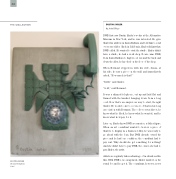
the collectionduStin ShulerBy Justin DipegoDWB first saw Dustin Shuler’s works at the Alternative Museum in New York, and he was interested. He gave Shuler his address in Santa Barbara and told him to send over some slides. Back in California, Shuler did just that. DWB called. He wanted to visit the studio. Shuler didn’t have a studio, he had a work shop. Down came DWB, from Santa Barbara to Inglewood. Around the back and down the alley, he knocked on the door of the shop.When Bermant stepped in with his wife, Susan, at his side, he saw a piece on the wall and immediately asked, “How much is that?”“$500,” said Shuler.“Sold,” said Bermant.It was a skinned telephone, cut up and laid flat and framed with the handset hanging down from a long cord. Now that’s an auspicious way to start, thought Shuler. He would come to see more of that in his long association with Bermant. The collector was direct, he knew what he liked, he knew what he wanted, and he knew what he’d pay for it.Later on, Shuler knew DWB as a mentor, a father figure. When an art consultant wanted to borrow a piece of Shuler’s to display in a business lobby, he was ready to go ahead with the loan. But DWB already owned the piece and he had one condition: the consultant had to pay rent. Why should she get something for nothing? And she didn’t have to pay DWB, the owner, she had to pay Shuler, the artist.Artists are regularly taken advantage of in situations like this. With DWB’s encouragement, Shuler insisted on the rental fee and he got it. The consultant, however, neverDUSTIN SHULER Skinned Telephone 198660